


A hundred dollars does not buy a professional impact wrench, but it does buy a tool that will loosen lug nuts, drive lag bolts and handle a surprising amount of home maintenance. The trick is knowing which specifications get sacrificed at that price and which ones you should refuse to compromise.
What a hundred dollars actually buys
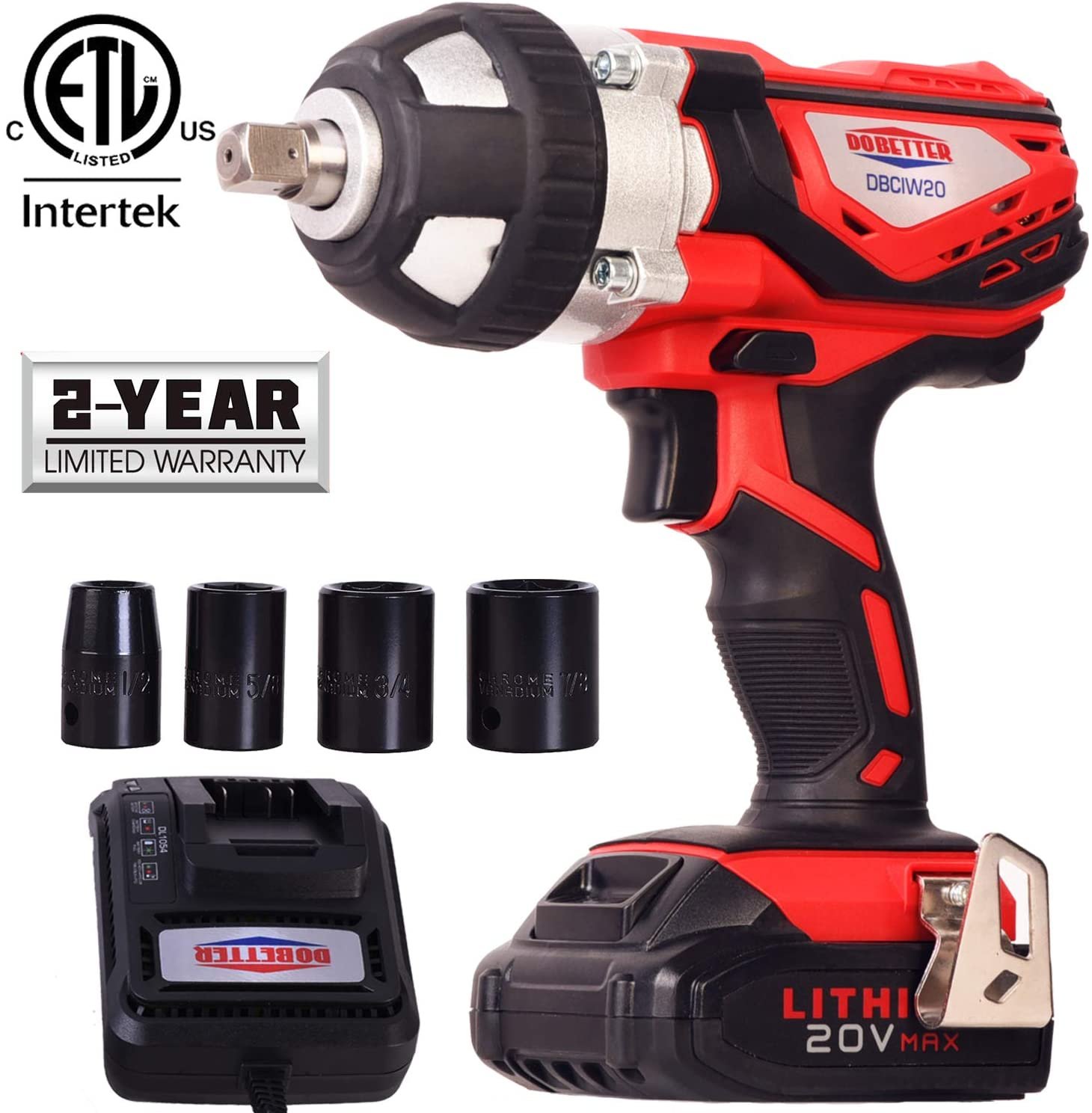
Expect a 1/2 inch cordless wrench with 200 to 350 foot-pounds of fastening torque, a brushed or entry-level brushless motor, and one battery. Expect the tool to be heavier than the pro-grade model and to run warmer under sustained load.
None of those are deal breakers for a homeowner. They are deal breakers for someone removing twelve wheels a day.
Numbers worth checking
- Breakaway torque of at least 250 foot-pounds for lug nuts
- 1/2 inch square drive, so standard impact sockets fit
- At least two or three speed settings, not just a trigger
- A battery that is part of a larger platform you might expand
Ignore peak wattage claims and ignore any number described as maximum torque without specifying breakaway or fastening.
Where the cheap ones cut corners
The hammer mechanism is the expensive part, so budget tools use fewer, lighter strikes. Battery cells are usually lower capacity, so a 2.0Ah pack runs a few dozen lug nuts rather than a few hundred.
What you rarely lose at this price is safety. A cheap impact wrench with impact-rated sockets is not an inherently dangerous tool; it is just slower and louder.
When it is the right purchase
Buy at this price if you change your own tires twice a year, assemble furniture, drive structural screws on a deck or work on a lawn tractor. Buy up if you do suspension work, live where road salt destroys fasteners, or plan to use the tool weekly. If you want the shortlist logic laid out, this roundup of impact wrenches under $100 compares the models that clear the bar.
Budget for the accessories
The tool is half the cost. A set of impact sockets in the sizes you need, a decent charger and a spare battery will add thirty to sixty dollars. Skipping impact-rated sockets is the one place you should not economize, because chrome sockets can crack under impact loads.
Making a cheap tool last
Do not hold the trigger down on a stuck bolt for a minute. Let the hammer work in short bursts, add penetrant, and give the fastener time. Blow dust out of the vents after every few jobs, since a budget motor has less thermal headroom than a professional one.
Bottom line
A hundred dollars buys a genuinely useful impact wrench if you match it to homeowner work and buy impact sockets. Check breakaway torque, drive size and battery platform, then spend the savings on sockets and a spare battery.
What a hundred dollars actually buys
At this price you are buying a 1/2 inch cordless or a compact air wrench with a realistic breakaway figure somewhere between 300 and 500 foot pounds. That is enough for passenger car lug nuts, brake calipers, suspension bolts on a light vehicle and most assembly work. It is not enough for a seized hub nut on a truck, and no amount of marketing will change that.
The trade you are making is in the anvil bearing, the motor windings and the trigger. Cheap wrenches use a smaller bearing and a plastic housing that flexes under load, which shows up as heat and noise rather than as a sudden failure. They also tend to have a two-stage switch instead of a variable trigger, which matters more than the torque number once you are lying on your back under a car.
Battery or air at this price
An air impact wrench under a hundred dollars is usually a better tool for the money than a cordless one, because the expensive part of a cordless wrench is the battery and charger. If you already own a compressor that delivers four CFM at 90 PSI, a cheap air wrench will outwork a cheap cordless one all day. If you do not own a compressor, the cordless route is the only sensible one, and you should budget for a second battery rather than a bigger wrench.
Where the savings show up
- Fewer torque settings, often three or four rather than continuous
- Plastic or thin die-cast housings that get hot in extended use
- Shorter warranty, typically one year instead of three
- No friction ring, so sockets pull off and stay in the wheel well
- Heavier for the same torque, because the motor is less efficient
None of those are disqualifying for occasional use. They become annoying when the tool is used weekly, which is why the honest advice is to buy cheap for a second wrench and spend more on the one you reach for first.
What to check in the store
Spin the anvil by hand and feel for roughness. Check that the direction switch moves with a gloved thumb. Look at the socket retention: a pin detent holds better than a friction ring on a cheap tool. Weigh it with a battery fitted, and check whether the battery is included at all, because a bare tool price is not comparable to a kit price.
For a shortlist that stays inside the budget without the worst of these compromises, this roundup of the best impact wrench under 100 dollars is a reasonable place to compare specifications.
Making a cheap wrench last
Do not use it continuously; let it cool between wheels. Use impact sockets only, never chrome. Keep the battery out of freezing temperatures and charge it before it is flat. Oil an air wrench daily if the manual asks for it, and drain the compressor so you are not blowing water into the tool. Treated this way a hundred dollar wrench will do years of wheel rotations, which is all most people actually need.
Bottom line
Spend the hundred dollars on the right format rather than the biggest number: air if you have a compressor, cordless if you do not, and a 1/2 inch anvil either way. Accept the shorter warranty and the two-stage switch, add impact sockets and a second battery, and the tool will earn its place in the trunk.