




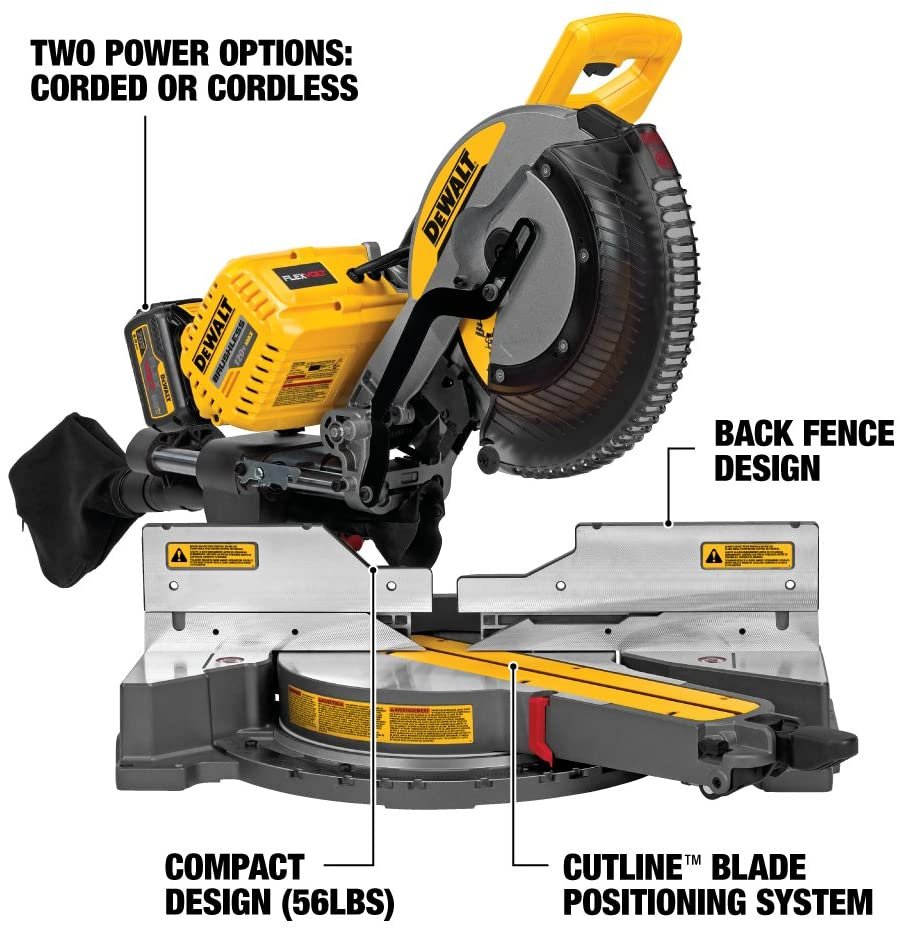
A miter saw is one of the safest power tools in a shop, right up to the moment someone feeds it the wrong material. The blade spins fast, the guard depends on a smooth return, and anything that binds or melts is a projectile. Here are the materials that should never go under the blade, and what to use instead.
1. Metal and aluminium extrusions
Wood blades are not designed for metal. Aluminium clogs the teeth, heats, and can catch and pull the workpiece. There are metal-cutting blades for miter saws, but they run at lower speeds than a wood saw provides, and the offcut becomes sharp and hot. Use a portaband, a cold saw or an angle grinder with a cutting disc.
2. Fibreglass, composites and fibreglass-reinforced plastic
Fibreglass dust is a skin and lung irritant, and it abrades the blade and the guard mechanism. If you must cut it, use a saw with dust extraction and a proper respirator, and expect the blade to be consumed. A miter saw is the wrong tool for the volume of dust it produces.
3. Concrete, masonry and tile
An abrasive blade in a wood saw spins too fast and the guard is not designed to contain the debris. Tile and masonry belong on a wet saw, which controls silica dust with water. Cutting dry masonry indoors is a genuine health risk that no shop vac will solve.
4. Wet or green lumber
- Sap loads the blade and creates friction burns
- Wet wood moves after the cut, so the joint will not close
- A wet blade can slip in the kerf and bind
Let stock dry, or use a hand saw for rough work on green timber.
5. Anything unclamped or too small to hold
Small offcuts are the classic injury. A miter saw that grabs a two-inch piece of trim throws it at the operator. Cut small pieces with a handsaw or a pull saw, or clamp them to a longer sacrificial board so there is something to hold.
6. Plastic pipe and PVC
PVC melts and grabs. There are specific blades for it, but the standard miter saw blade will chip and can shatter brittle pipe. Use a dedicated pipe cutter or a saw with the right tooth count and speed.
7. Stacked or bundled material
Cutting multiple pieces at once looks efficient. In practice the blade can shift one piece into the kerf, and the bundle binds. Cut one piece, check the angle, then cut the next.
If you want the full safety sequence for the saw you already own, including how to check the detents and support long stock, this guide on materials you should never cut with a miter saw is worth reading before the next project.
Bottom line
A miter saw cuts wood, and soft plastics with the right blade. Metal, masonry, composites, wet stock and small unclamped offcuts belong on a different tool. The three-second decision to switch machines is cheaper than an emergency room visit.
Why the blade matters more than the material
Every material on the list fails for one of three reasons: it melts and grabs, it shatters and throws fragments, or it abrades the blade and the guard mechanism until something binds. A wood blade has hardened teeth and deep gullets designed to clear chips. Feed it aluminium and the chips weld to the teeth, the kerf closes and the blade stalls with the motor still pushing. Feed it fibreglass and the abrasive dust destroys the guard pivot, which is the part that keeps the blade covered.
Metal cutting, done properly
A miter saw can cut metal, but only with a blade rated for it and a saw that runs at the right speed. Abrasive chop saws spin slowly and use a consumable disc; dry cut saws use a carbide tipped blade at lower rpm with a clamp that holds the stock. A wood saw spins too fast for either, which overheats the teeth and throws hot swarf. If you cut a lot of metal, buy a dedicated machine; if you cut one piece, use a portaband or a grinder with a cutting disc.
Composite and cement board
Cement board and fibre cement siding contain silica, and dry cutting them indoors is a genuine health risk. The dust also abrades the saw, packs the guard and coats the motor windings. If the material must be cut, use a saw with dust extraction and a respirator rated for particulates, and accept that the blade will be consumed. A circular saw with a scoring blade is often the better tool because it produces less airborne dust per cut.
The small piece problem
Short offcuts are the most common injury on any miter saw, not just because the piece is small but because the blade can catch it and throw it. Anything shorter than about twenty centimetres should be cut on a different tool, or clamped to a longer sacrificial board so there is something to hold and something for the blade to clear. A handsaw takes longer and is always the right answer for a piece that will not sit still.
Kickback and the guard
Miter saws do not kick back the way a table saw does, but they do climb. A blade that binds in a closing kerf can lift the workpiece and pull the head down through the cut, which is why the workpiece must be clamped and the fence must be square. Never remove the guard to fit a larger blade, and never hold the head down while the blade spins down, because the blade is still cutting.
Materials people get wrong
- Treated lumber: corrosive dust and wet stock that binds
- Plastic conduit and PVC: melts and grabs at wood saw speeds
- Laminate flooring: chips unless cut face down with the right tooth count
- Foam insulation: cuts fine but the dust is static and everywhere
- Bundled trim: the blade shifts one piece into the kerf
None of these are impossible; they are simply the cases where the correct blade, the correct speed or a different tool makes the difference between a clean cut and an injury.
Bottom line
A miter saw cuts wood, and soft plastics with the right blade. Metal, masonry, composites, wet stock and small unclamped offcuts belong on a different tool. The three second decision to switch machines is cheaper than an emergency room visit, and it is the habit that keeps a workshop safe over years.