



Sooner or later everyone with an impact wrench in the box wonders whether it can do the job of a drill. The short answer is that it physically can turn a bit, and the longer answer is that doing so is a good way to ruin both the bit and the fastener. Understanding why takes about three minutes and will save you a set of drill bits.
What an impact wrench actually does
Inside the housing, a hammer mechanism strikes an anvil several times per second. Each strike delivers a short burst of torque rather than a continuous rotational force. That is ideal for breaking a seized nut loose, because the repeated impact works against corrosion without requiring you to brace against enormous reaction torque.
A drill, by contrast, applies smooth continuous torque and holds a constant speed under load. The two mechanisms are not interchangeable, and the difference is the entire reason impact drivers exist separately from drills.
Why bits fail
Drill bits cut by shearing material away along a continuous edge. Under percussion they chip, wander and overheat. Hardened bits snap. The chuck on an impact wrench is not a chuck at all: it is a square anvil with a detent or ring, so unless you buy a hex adapter, there is nowhere to hold a bit.
If you do fit an adapter, the adapter becomes the weak link. Hex shank adapters are not rated for impact loads in most cases, and a snapped adapter spinning inside a hole is worse than no hole at all.
Where it does work
- Driving large structural screws with impact-rated hex bits and a proper adapter
- Boring holes in softwood with an impact-rated auger bit at low speed
- Mixing mortar or paint with a dedicated mixing paddle rated for the torque
- Loosening and tightening bolts, which is what the tool was designed for
Even in these cases, control matters. Impact wrenches have poor low-speed modulation, so the first moment of contact is where damage happens: stripped screw heads, torn grain, and holes that wander off your mark.
What to use instead
If you need to drill, a cordless drill or a drill driver with a clutch will do it better and cost less than the adapter and bits you would burn trying to make the impact wrench work. For masonry, a rotary hammer is the right tool. For metal, a drill press or a drill with the right speed range.
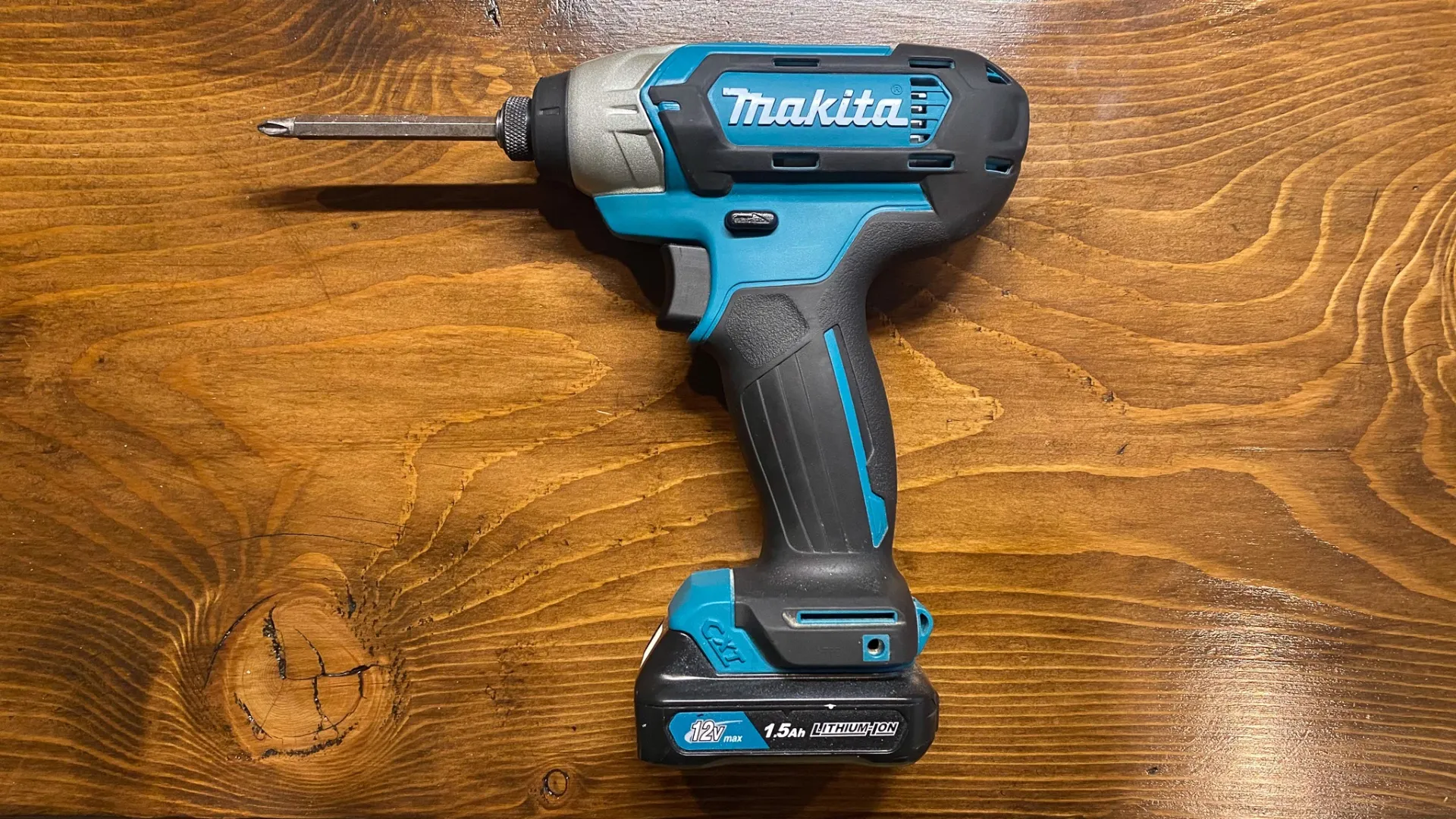
The one legitimate overlap is screw driving in decking and framing, where an impact driver (a smaller, faster cousin of the impact wrench) is genuinely the better tool. If you want the reasoning laid out side by side, this explanation of using an impact wrench as a drill covers the mechanical differences and the failure modes.
The practical rule
Keep the impact wrench for fasteners and the drill for holes. Buy impact-rated accessories for the wrench, buy a good set of bits for the drill, and stop trying to make one tool cover both jobs. Your bits, your wrists and your finish work will all be better for it.
Bottom line
An impact wrench can spin a bit, but it cannot drill the way a drill drills. The hammer mechanism that makes it good at fasteners is exactly what destroys cutting edges. Use each tool for the job it was designed for and the whole toolbox lasts longer.
Why an impact wrench cannot drill
An impact wrench has no way to control rotation speed in the range a drill bit needs. It delivers rotational torque in short hammering blows, and the bit is expected to spin at a steady rate while the cutting edge shears material away. A twist drill relies on continuous rotation at a moderate speed with steady feed pressure; an impact wrench delivers high torque pulses and almost no speed control, so the bit grabs, chips and burns instead of cutting.
There is also no chuck. Impact wrenches use a square drive for sockets. Fitting a drill chuck to a square drive means an adapter, and every adapter adds runout, which turns a small bit into a wobbling tool that breaks in the hole. Even a carefully made adapter cannot give you the low speed and light trigger you need to start a hole cleanly.
What actually breaks
- Drill bits shatter under impact loading, and the fragments are sharp
- Adapters bend or round off at the square drive
- The anvil wears from side loads it was never designed to carry
- Wood tears out around the hole instead of cutting cleanly
- Masonry bits lose their carbide tips in seconds
Side load is the quiet damage. An impact wrench anvil is designed for pure rotation with the socket held square to the fastener. Drilling pushes sideways, which loads the anvil bearing and the housing in a direction the tool was never built for. The tool will still run afterwards, which is exactly why the damage goes unnoticed until it fails.
Where the idea comes from
People try it because an impact wrench will, in fact, turn a drill chuck. It will also drive a screw, mix paint and spin a wire brush. Turning is not cutting. The same reasoning applies to any fastener: what matters is controlled speed at the cutting edge, and an impact wrench has none.
What to use instead
For screws and small fasteners, an impact driver has a hex quick-change chuck, a clutch and enough speed control to drive without stripping heads. For holes in wood, a corded or cordless drill with a real chuck and two speed ranges is the right tool. For masonry, a rotary hammer with SDS bits is the only sensible choice, and it costs less than the damage a hammer drill does to brick over a weekend.
If you already own an impact wrench and need to drive a few lags, an impact-rated hex adapter and a heavy hex bit will do that job, because a lag bolt is a fastener, not a hole. That is the one legitimate overlap, and it is worth stating plainly so nobody wrecks a good wrench learning it the hard way.
Safety notes
Hearing protection is not optional; an impact wrench at close range is louder than most saws. Eye protection matters because bits and adapters fail in fragments. Keep the work clamped, never hold a small piece in your hand, and remember that a tool which grabs will twist your wrist faster than you can react.
Bottom line
An impact wrench is a fastener tool. It has no chuck, no speed control and no side-load capability, and the adapters people use to bridge that gap make the problem worse. Buy a drill for holes, an impact driver for screws, and keep the wrench for bolts.