


An angle grinder is a simple machine: a motor, a gearbox and a spinning disc. That simplicity is exactly why the cheap ones look like a bargain, and why the failures happen in the same three places every time. If you are shopping under a hundred dollars, knowing where the money runs out tells you which model to buy.
The two sizes that matter
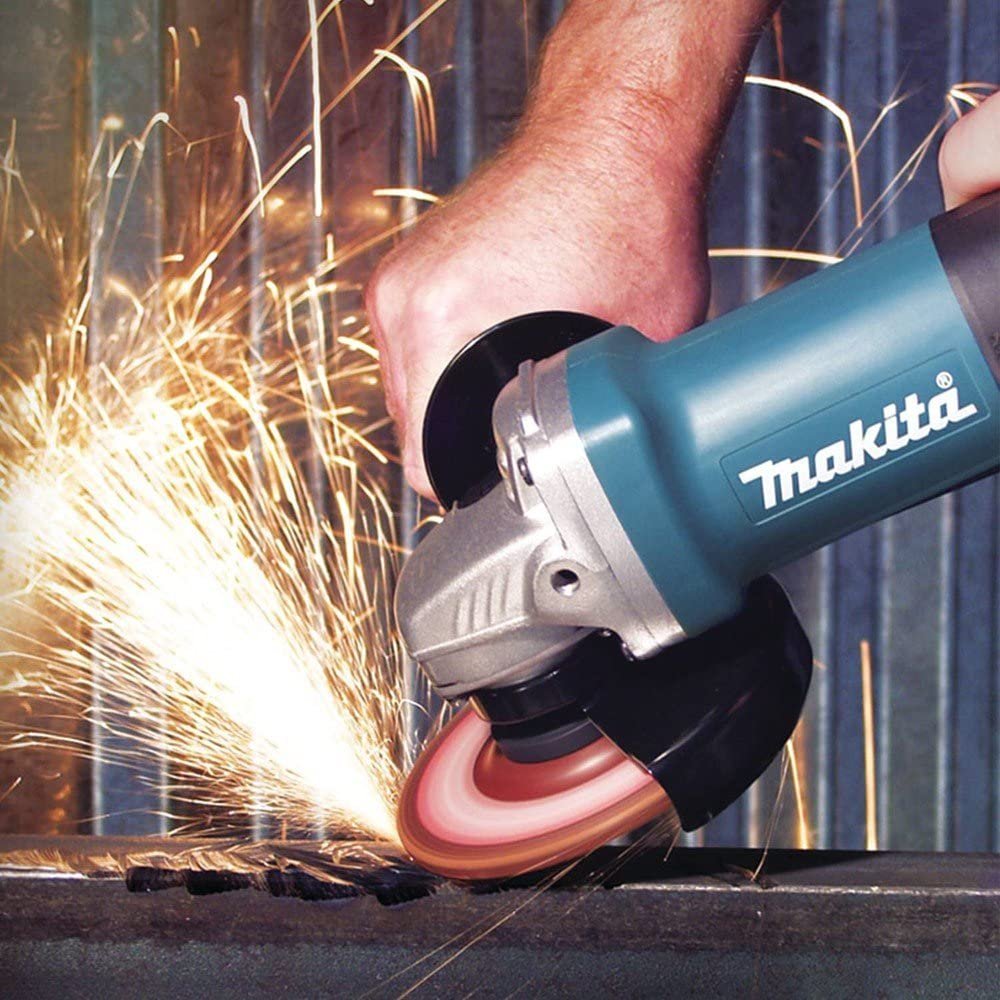
Most budget grinders are either 4 1/2 inch or 5 inch. The 4 1/2 inch model is lighter, cheaper and uses the most common disc size in the world, so accessories are easy to find. The 5 inch model cuts deeper in one pass and fits a larger guard, which makes it more forgiving for masonry.
Do not buy a 7 inch grinder as a first tool. It is heavy, it demands two hands, and the discs cost more than the tool.
Watts, amps and the number on the label
Marketing wattage is not the same as sustained output. A budget grinder rated at 900 watts may draw that at start-up and settle lower under load, which shows up as a disc that slows down in a cut and burns through the material instead of cutting it.
Where budget grinders fail
- Gearbox bearings, which get noisy and loose after heavy use
- Switch and cord entry, where flexing breaks the conductors
- Guard adjustment, which sticks and then gets left off
- Spindle lock, which strips if you tighten a disc without it fully engaged
- Cooling, since a small fan housing overheats in continuous work
The guard is the one component you should never compromise. If the guard is flimsy, the tool belongs back on the shelf regardless of price.
What you actually need
For a home shop, a 4 1/2 inch grinder with a metal body, a tool-free guard, a side handle you can mount in two positions and a decent cord length covers grinding, cutting and wire brushing. For a comparison of the models that get this right, this roundup of budget angle grinder options is a sensible starting point.
Discs are half the budget
Buy quality cutting discs in the size your grinder takes, and buy more than you think. A cheap disc wears quickly, loads up and cuts hot, which warps thin metal and leaves a burr you then have to file.
Safety habits that cost nothing
Wear eye protection and a face shield when cutting overhead. Keep the guard on and the handle fitted. Never cut with the disc turning toward you. Let the tool reach full speed before contact and let it stop on its own. Unplug it before changing a disc, every single time.
Bottom line
A hundred dollars buys a grinder that will cut rebar, sharpen a mower blade and strip paint for years, provided you buy the 4 1/2 inch size, check the guard and switch, and spend on discs rather than on wattage claims.
The four failure points
A budget grinder usually fails at one of four places: the switch, the gearbox, the bearings or the cord. The switch fails first because a slide switch is cheaper than a paddle, and a slide switch filled with grinding dust stops latching. The gearbox fails next, because grease quantity and quality are the easiest savings a manufacturer can make, and a gearbox running dry howls before it seizes.
Bearings are where the noise comes from. A quality grinder runs with a smooth whine; a cheap one rasps, and the rasp gets louder as the bearings wear. The cord is the last and cheapest failure, and the one you can prevent: a strain relief that holds the cord straight at the housing is worth checking before you buy.
What the price actually changes
- Power: budget grinders are typically 4 to 6 amps, which bogs down on masonry and heavy steel
- Switch type: slide versus paddle, with paddle being safer because it releases when dropped
- Guard adjustment: tool-free on better models, a screwdriver on cheap ones
- Vibration: cheap bearings and an unbalanced armature show up as hand numbness after ten minutes
- Spindle lock: a weak lock makes wheel changes frustrating and dangerous
None of these show up on the box. The specification sheet lists watts and disc size, which are the two numbers that matter least once you are actually cutting.
Where a budget grinder is fine
If your work is occasional cutting of rebar, wire shelving, bolts and thin steel, a four and a half inch grinder under a hundred dollars will do everything you ask. It will be loud, it will vibrate, and the guard will need a screwdriver, but it will cut. What it will not survive is production work: cutting masonry all day, wire brushing for an hour at a time, or running a diamond cup wheel on concrete.
Safety that the price cannot compromise
Wear a full face shield over safety glasses, not instead of them. Use the guard, always, even when it is inconvenient. Fit the side handle and hold the tool with two hands. Never cut with the blade rotation pulling the tool toward you, never remove the guard to fit a larger disc, and never use a wood cutting blade on an angle grinder. Kickback happens in a fraction of a second and the grinder keeps spinning afterwards.
Buying checklist
Check the switch action, spin the spindle by hand for roughness, confirm the guard adjusts without tools, and look at the cord entry. Buy a name-brand disc; the disc matters more than the grinder for cut quality and safety. Keep the vents clear, blow the tool out after masonry work, and replace the grease every few years if you use it hard.
Bottom line
A budget grinder is a real tool with real limits: occasional cutting of steel and thin material, with the guard on and two hands on the tool. If your work is daily or continuous, spend more; if it is a few cuts a month, the cheap one will earn its shelf space.