



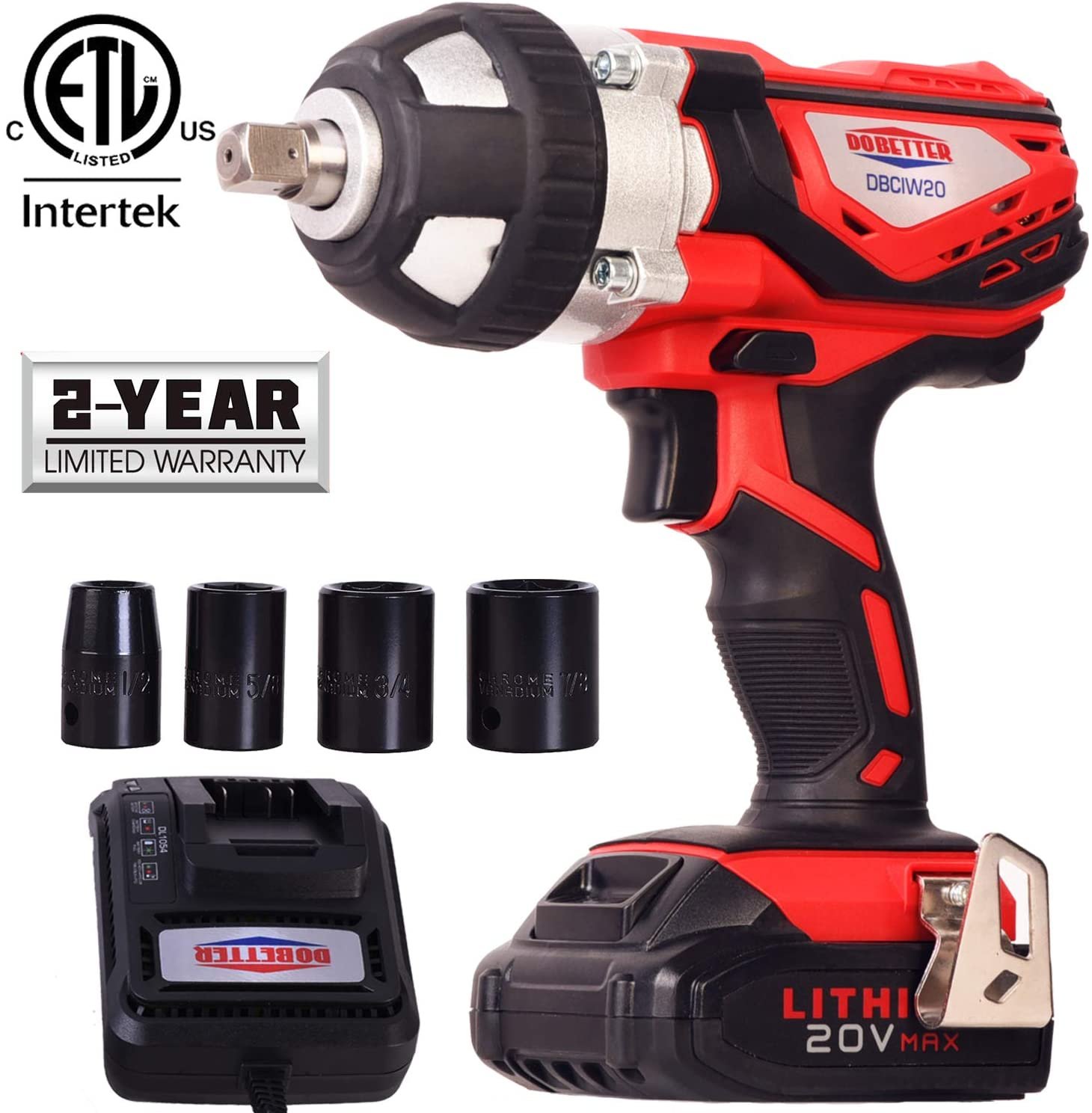
Torque figures sell impact wrenches, and they are the least useful number on the box for most buyers. A wrench rated at 1200 breakaway foot pounds and one rated at 700 will loosen the same lug nuts, because the specification describes a peak that lasts a fraction of a second. What decides whether a wrench is pleasant to use is anvil size, weight distribution, control at low speed and how the tool behaves once the fastener is already moving.
Breakaway torque versus fastening torque
Breakaway torque is the peak the tool can produce to loosen a seized fastener. Fastening torque is what it delivers continuously. A wrench with high breakaway and modest fastening torque is normal, and it is the right shape of tool: you need the peak once per wheel and the controlled figure for everything else.
Manufacturers measure breakaway on a fresh battery, at room temperature, with a fully charged pack and a specific socket. Change any of those and the number drops. Cold weather alone can cost twenty percent, and a worn battery costs more than that.
Anvil size: the decision that matters
- 1/4 inch hex: light duty, small screws, assembly work
- 3/8 inch square: lug nuts on passenger cars, most general work
- 1/2 inch square: truck lugs, suspension, the standard for automotive
- 3/4 inch and 1 inch: heavy equipment, requires air or high voltage
Buy the anvil that matches your sockets, then buy sockets that survive impact use. Chrome sockets shatter under impact load; impact sockets are softer and thicker for a reason. A 1/2 inch mid-torque wrench with good impact sockets covers almost every automotive job a home mechanic will meet.
Weight and balance
A heavy wrench held at arm length above your head, which is where exhaust and suspension bolts live, is tiring in a way that no specification sheet mentions. Mid-torque designs trade some peak for a shorter body and better balance. If you work on a lift, weight matters less; if you work on your back in a driveway, it matters more than fifty foot pounds of headline torque.
Control at low speed
Good wrenches let you feather the trigger and run slowly, which is how you start a thread without cross threading it. Cheap wrenches have an on-off trigger and a four-setting switch that is either too slow or too fast. Variable speed control is the single feature worth paying for, and it is the one buyers notice least in the store.
Battery platform and runtime
Runtime is measured in fasteners, not minutes. A compact 18 volt wrench typically removes sixty to a hundred lug nuts per charge, which is several wheel rotations. Larger packs add weight and rarely add usefulness on a wrench, because the tool is used in short bursts. If you already own a battery platform, buy into it; the savings on packs and chargers usually outweigh a small torque advantage elsewhere.
Air versus cordless
Air impact wrenches are lighter, cheaper and never run flat, but they need a compressor with enough CFM and a hose that does not strangle them. Cordless wrenches win on portability and are the sensible choice for anyone without a shop compressor. If you already run air tools, a 1/2 inch air wrench is still hard to beat for sustained work.
Torque units, and what the number means in practice
Foot pounds and Newton metres are the two units you will meet, and the conversion is roughly 1.36 to one. A specification of 700 foot pounds is about 950 Newton metres. That matters when you compare a European manual against an American spec sheet, and it matters more when you look up a tightening specification and need to set a torque wrench in the other unit.
Peak torque also arrives at a specific speed. A wrench that produces its maximum just as the fastener breaks free produces almost nothing at the moment you need control, which is why the low-speed figure and the trigger feel matter more than the headline number. If you plan to torque a cylinder head or a suspension bolt to a specification, finish with a hand torque wrench; no impact tool is a substitute for that.
What to check before you pay
Confirm the anvil size, the socket type included, whether the tool has variable speed, and what the warranty covers. Check the weight in your hand with a battery fitted; specifications list bare tool weight, which is often a pound lighter than the tool you will actually use. Look at the direction switch, because a switch that is stiff with gloves on is a daily annoyance.
For a comparison of models that get anvil size and low-speed control right without spending a fortune, this roundup of the best cheap impact wrench options is a reasonable starting point.
A short selection checklist
- Anvil size matched to the sockets you already own or intend to buy
- Variable speed trigger, not a two-stage switch
- Weight with a battery fitted, checked in your hand rather than on the box
- Direction switch you can work with gloves on
- A battery platform you already own, or one you are willing to commit to
- Impact-rated sockets included or budgeted for on the same trip
Technique notes
Start fasteners by hand, then run them in. Use the correct impact socket, not an adapter, because adapters absorb torque and shorten socket life. Never use a wrench on a torque-to-yield bolt you intend to reuse, and always finish wheel nuts with a torque wrench rather than an impact. Oil the anvil occasionally if the manual calls for it, and keep the vents clear of dust.
Battery care that keeps the torque honest
Charge packs at room temperature, not in a freezing garage, and store them at about half charge if the tool will sit for months. A pack left flat loses capacity permanently. Keep the contacts clean with a dry cloth, and never leave a battery on the charger indefinitely.
Bottom line
Choose the anvil size for your sockets, pay for variable speed and reasonable balance, and treat peak torque as marketing until you need it once per wheel. A mid-torque 1/2 inch cordless wrench with good impact sockets will do more useful work than a high-torque monster that tires you out before the second wheel.