



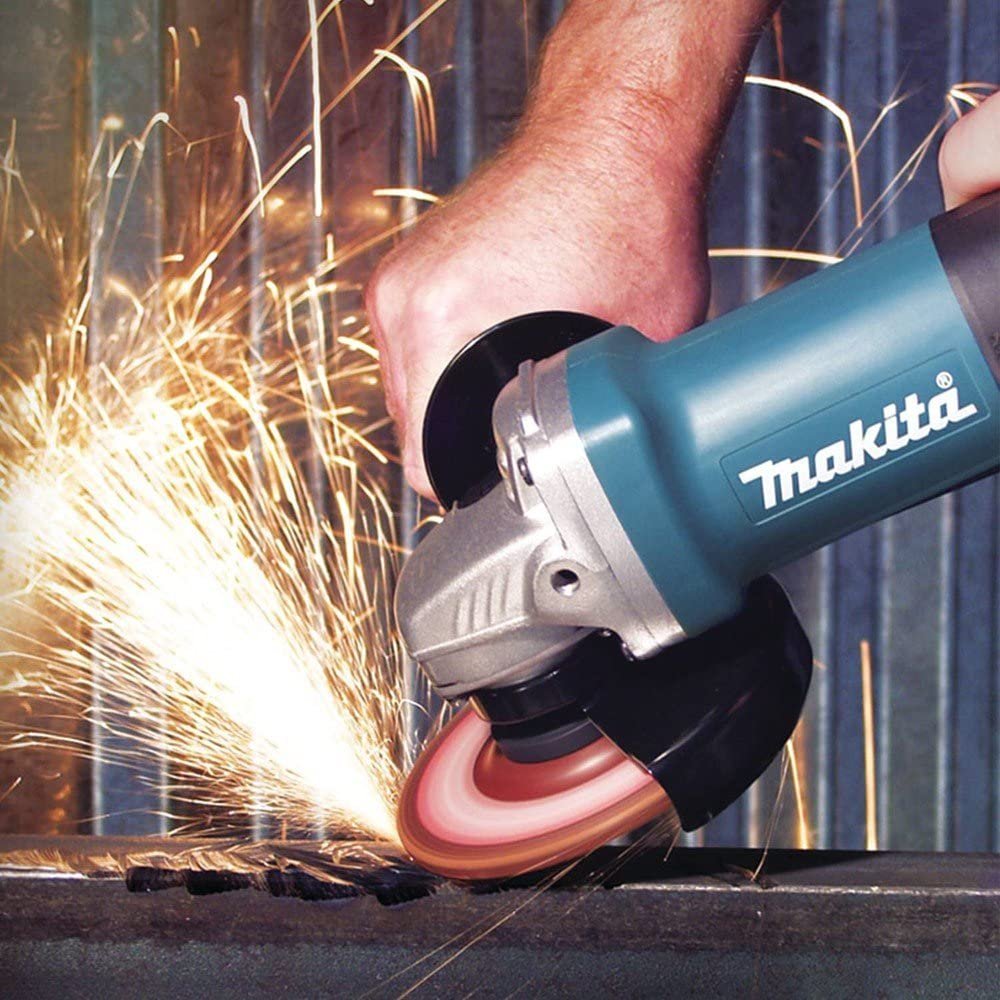
Every tool review talks about what an angle grinder can do. Almost none explain what it is bad at, and that gap is where most injuries and most ruined workpieces come from. A grinder is a high-speed cutting tool with almost no feedback, and the drawbacks are real.
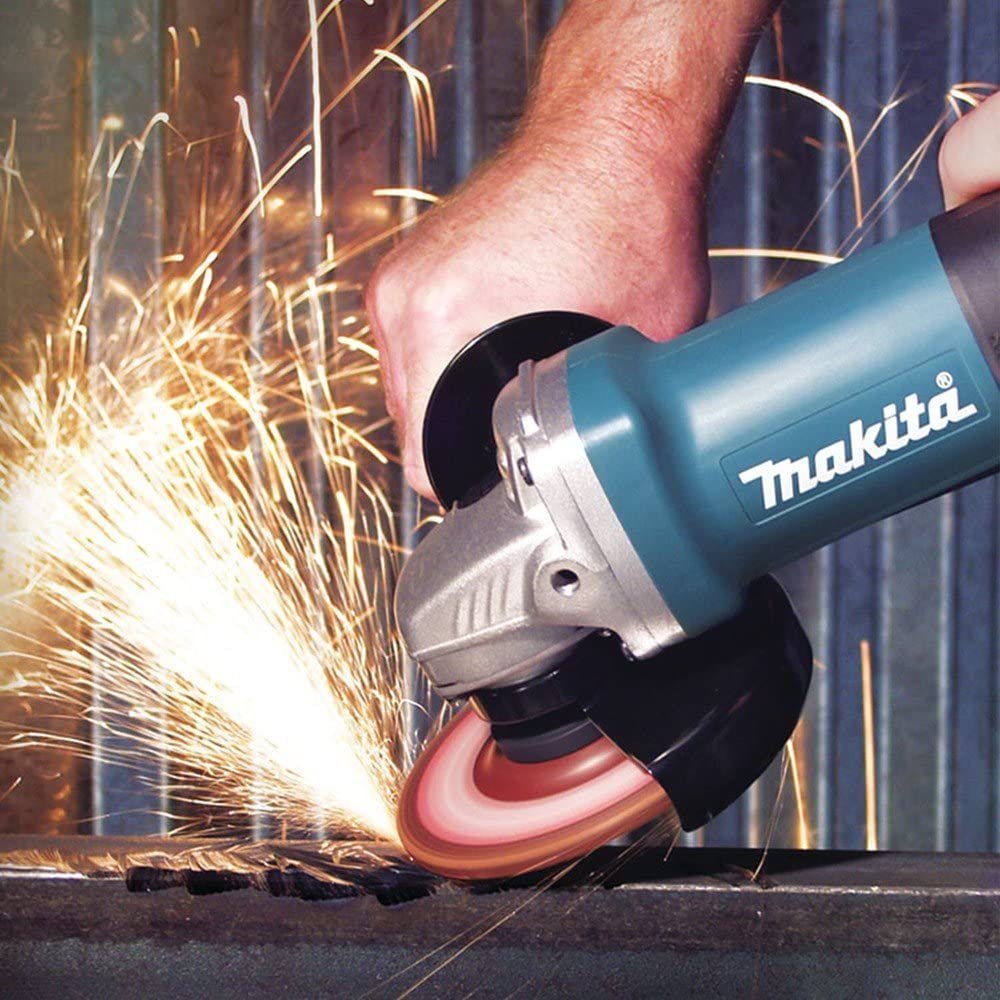
It removes material fast and without warning
A grinder does not ease into a cut. The disc is spinning at over ten thousand revolutions per minute, and the moment of contact removes material at a rate that is hard to control. One slip gouges a workpiece, one kickback throws the tool. Experienced woodworkers who are comfortable with a router are often surprised by how little a grinder forgives.
Kickback is the real risk
When a spinning disc binds in a cut, the reaction torque spins the tool back toward the operator. Small grinders are light enough that this happens in a fraction of a second. The guard and side handle exist to control that reaction, and both are routinely removed by people who find them inconvenient.
Dust and debris
Grinding metal throws hot sparks several feet. Cutting concrete creates silica dust, which is a genuine health hazard and requires respiratory protection and water or extraction. Cutting treated lumber releases chemicals you do not want to breathe. None of this is theoretical, and none of it is solved by a paper mask.
Precision is not its strength
- Straight cuts in sheet metal wander without a guide
- Plunge cuts are difficult and dangerous without practice
- Bevels and chamfers are inconsistent by hand
- Thin material warps from heat before the cut is finished
If you need a straight, clean cut, a saw or a plasma cutter does the job better. The grinder is a roughing tool that can be made accurate with a clamped straight edge and patience, not a substitute for a proper saw.
Noise and vibration
A grinder runs loud enough to damage hearing in minutes at close range, and the vibration numbs hands during long sessions. Both are manageable with ear defenders and gloves, but they make the tool tiring in a way that a bandsaw or a chop saw is not.
Consumable cost adds up
Discs wear out. Cutting stainless contaminates a disc, so you need separate discs for separate metals. Wire brushes shed, flap discs load, and diamond blades glaze if you cut wet material dry. Over a year of regular use, the consumables cost more than a mid-range grinder did. These angle grinder drawbacks are worth understanding before you buy, because they change which accessories make sense.
When a different tool is the right answer
For straight cuts in lumber, use a circular saw. For curves in sheet metal, a nibbler or a jigsaw. For tile, a wet saw. For concrete, a proper cut-off saw with water. The grinder earns its place for grinding welds, cleaning up rust, sharpening, and cutting metal where nothing else fits. It is a specialty tool that has been marketed as a universal one.
Bottom line
An angle grinder is worth owning, but only if you accept its limits: it is loud, dirty, imprecise and dangerous when rushed. Keep the guard on, wear the protection, clamp the work, and reach for a different tool whenever the cut has to be clean. Buy the grinder for the jobs it does well, not as a substitute for every saw in the shop.
Dust is the real cost
Cutting and grinding produce fine dust in volume, and the fraction that stays airborne is the fraction that reaches your lungs. Concrete and masonry dust contains crystalline silica, which is a known cause of silicosis; the effect is cumulative and dose dependent, which is why a respirator matters more than the grinder you choose. Water suppression or a shroud with a vacuum are the two effective controls, and neither is included with the tool.
Noise and vibration
An angle grinder runs at eleven thousand revolutions per minute, and the noise is loud enough at close range that hearing damage is a realistic concern over years. Vibration is the second occupational hazard. Hand-arm vibration syndrome develops slowly and shows up first as numbness and tingling in the fingers after long sessions. Anti-vibration gloves and a tool with a balanced armature reduce exposure, but nothing eliminates it.
The injury profile
- Kickback when the disc binds in a cut, which throws the tool toward the operator
- Disc fragmentation, which sends pieces at high speed
- Laceration from unguarded cutting, especially when reaching around corners
- Burns from touching a disc or work piece that looks cool but is not
- Eye injury from sparks and metal particles
Every one of these is a reason to keep the guard fitted, use a face shield and never cut with the blade pulling toward you.
Limited precision
An angle grinder is not a precision tool. It cuts a rough line, leaves a burr and cannot produce a square edge without a guide. If you need a clean cut in tile, a wet saw does it better; for sheet metal, a shear or a nibbler. Buying a grinder to replace those tools leads to disappointment and a lot of finishing work.
Consumable cost
Discs, wire brushes and flap wheels are not cheap and they wear quickly on hard material. A project can consume more in consumables than the grinder cost. Cheap discs are worse value because they wear faster and fail in use, which is the one place a budget purchase is genuinely dangerous.
When it is still the right tool
For cutting rebar, bolts, pipe and thin steel, and for grinding welds and rust, nothing else is as fast or as cheap. The disadvantages are manageable with a guard, a shield, two hands and the understanding that the tool is for rough work.
Choosing the disc for the job
Most grinder accidents start with the wrong disc. A thin cutting disc is for cutting only; applying side load to it, which is what grinding with a cutting disc amounts to, can shatter it. A grinding disc is thick enough for side load and should never be used to cut a deep groove. Flap discs sit between the two and remove material quickly while leaving a finish that needs no further work, which makes them the best value for rust and weld cleanup. Match the disc diameter to the grinder and never fit a larger disc than the guard covers.
Check the disc for cracks before fitting it, run the tool for a few seconds in free air, and keep the wrench where you can find it. Those three habits cost nothing and prevent the injuries that make people sell the tool.