



A 6500-watt generator is the size that shows up in every storm-season buying guide, and for once the marketing matches the reality: it is roughly the smallest unit that can carry a house through a multi-day outage without asking you to choose between the fridge and the furnace. The details are where people get surprised.
Running versus starting watts
Six thousand five hundred watts is the running figure. Starting watts will be higher, often 8000 or more for a brief surge, and that surge is what starts a well pump, a furnace blower or an air conditioner compressor. Add up the starting watts of every motor you intend to run at once, not the running watts, and compare against the surge rating.
What it actually runs
- Refrigerator and freezer: 200 watts running, 1200 surge each
- Gas furnace blower: 500 to 800 watts
- Well pump: 800 to 1500 watts running, much higher on start
- Sump pump: 300 to 600 watts
- Lights, router, chargers, TV: 300 to 500 watts total
- Microwave: 1000 to 1500 watts
- Window air conditioner: 1000 to 1500 watts running, 3000 surge
That list fits inside 6500 watts with careful sequencing and does not fit if you add a space heater or an electric water heater. Decide what you will actually unplug before you decide the generator is big enough.
Inverter or conventional
Conventional generators produce clean enough power for motors and lights but can upset sensitive electronics. Inverter generators cost more for the same wattage and produce a stable sine wave, which matters for modern furnaces with circuit boards and for computers. If your heat is a modern high-efficiency furnace, an inverter is worth the premium.
Fuel and runtime
Expect six to twelve hours on a full tank at half load, less at higher loads. Store fuel safely, rotate it, and add a stabilizer. A generator that runs out at two in the morning because the tank was half full is a planning failure, not a hardware one.
Connection: the part that gets skipped
Never backfeed a house panel with a suicide cord. Use a transfer switch or an inlet box with a proper interlock, installed by a licensed electrician. A 6500-watt unit typically wants a 30 amp twist-lock outlet, so plan the cord and the inlet at the same time. If you want a shortlist of units with the right outlet configuration and runtime figures, this roundup of 6500 watt generators compares them on the numbers that matter.
Placement and safety
Run it outdoors, well away from windows and doors, and never in a garage even with the door open. Carbon monoxide is the leading cause of death in generator incidents, and it has no smell. Install battery-powered CO alarms, keep the unit dry, and let it cool before refueling.
Bottom line
Six thousand five hundred watts runs essential loads if you sequence them and start with an honest list. Budget for the transfer equipment, choose inverter if you have a modern furnace, and treat fuel planning and placement as part of the purchase rather than an afterthought.
Sequence the loads
Six and a half kilowatts disappears faster than people expect, and the usual cause is starting everything at once. Bring loads on in order: well pump first, then furnace, then refrigerator, then everything small. Each motor draws two to three times its running current for a second or so, and two motors starting together can exceed the surge rating even when their combined running load is well inside it.
What the outlets actually give you
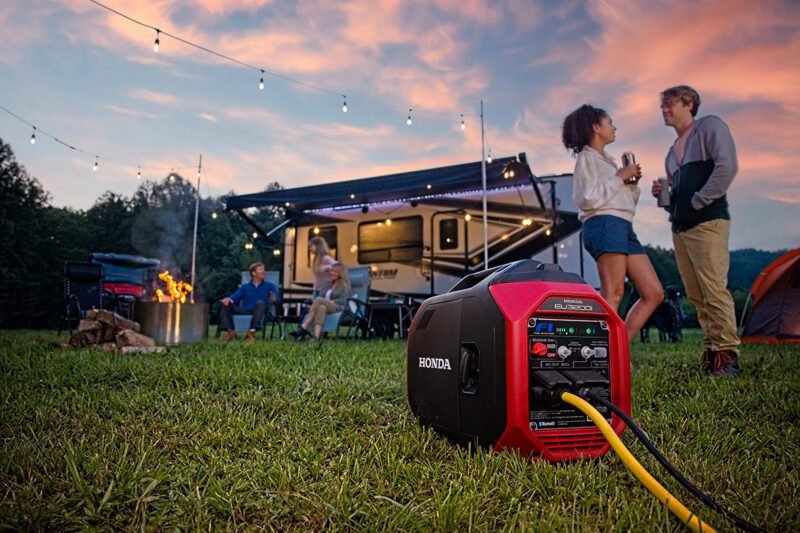
A 6500 watt unit typically has one thirty amp twist lock outlet, two twenty amp household outlets and a twelve volt DC socket. The household outlets are usually limited to twenty amps each and often share a circuit, so plugging a space heater into each does not give you forty amps. Use the twist lock for a transfer switch or a spider box, and treat the household outlets as convenience only.
Fuel planning for a multi day outage
- Store fuel in approved containers, away from the house and any ignition source
- Rotate stock every few months and treat it with stabiliser
- Plan for roughly half a gallon an hour at half load, more at full load
- Never refuel a hot engine, and never indoors or in a garage
- Keep a funnel, gloves and a torch with the fuel, not in another building
Run the generator in blocks rather than around the clock. A few hours in the morning and a few in the evening covers hot water, cooking and refrigeration, and it halves fuel consumption compared with running continuously.
Noise, neighbours and placement
Set the unit at least five metres from doors and windows with the exhaust pointing away, and consider where the noise lands at night. A generator running outside a bedroom window is a dispute waiting to happen; a unit behind a shed is not. Keep it dry, and never operate it under a carport or in an attached garage, even with the door open.
Transfer equipment and code
Use a transfer switch or an inlet box with a mechanical interlock, installed by a licensed electrician. Backfeeding a panel with a male to male cord energises lines the utility believes are dead. A proper interlock costs a few hundred dollars and is the single most important safety purchase in the whole setup.
Maintenance between storms
Change the oil on schedule, run it under load every month or two, and keep a spare spark plug and air filter. A generator that only idles builds moisture in the crankcase and carburettor, which is why the units that fail are often the ones that were never exercised.
Testing before the season
Plug a lamp and a small heater into the generator and run it for twenty minutes under load, a month before storm season rather than during the first outage. Check the oil, the air filter and the fuel lines for cracking, and confirm the transfer switch still works. A generator that starts on the first pull in September will start on the first pull in January, and the reverse is also true.