

Front tine and rear tine are different tools
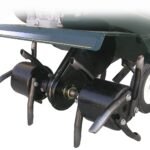
A tiller’s tines can sit at the front of the machine, ahead of the wheels, or at the rear, behind them. On a front tine tiller the engine sits above and behind the tines, and the weight of the machine rests partly on the tines themselves. On a rear tine tiller the tines are behind the wheels, the engine is centred, and the machine balances on its wheels while the tines work.
That single layout difference explains almost every practical difference between the two categories: effort, depth, finish quality and price.
When a front tine tiller is the right answer
Front tine tillers cost less, weigh less and fit in a shed. They are the right tool in specific situations:
- Small beds, typically up to a few hundred square feet, where long runs are not needed.
- Soil that has been worked before and is not compacted to concrete.
- Raised beds and narrow rows where a wide rear tine machine will not fit.
- Renters and casual gardeners who till a few times a season rather than weekly.
Where they stop making sense is breaking new ground with heavy clay, or tilling a large vegetable plot every spring. In those conditions the operator fights the machine, and the operator loses.
Why front tine tillers pull forward
Because the tines are ahead of the wheels and rotating in the direction of travel, a front tine tiller pulls itself forward when the tines bite. That sounds convenient and is the opposite in practice: the machine surges, the operator holds it back, and the effort goes into restraint rather than guidance. Because the tines drag the machine along, the operator also carries a share of the machine’s weight, which is tiring over a long bed.
Rear tine machines drive the wheels and the tines counter-rotate, so the machine moves under control. That is why a rear tine tiller can be used with one hand on flat, previously worked ground and why it costs roughly twice as much.
Engine size and realistic capacity
Front tine tillers are usually offered with engines between about 30cc and 210cc. The size should be matched to the width of the tines and the depth you intend to work.
- Small engines under about 50cc: light cultivation, soft soil, 6 to 10 inch tine width, shallow depth.
- Mid engines around 80cc to 160cc: the common domestic range, 8 to 16 inch width, workable depth in soil that has been tilled before.
- Large engines around 200cc: heavy domestic use, wider tines, and enough torque to work compacted ground if the operator is willing to make several passes.
A large engine on a light frame is not an advantage. It adds weight without adding the frame stiffness needed to hold the tines in the ground, so the machine walks across the surface instead of digging.
Tine width, tine count and tine shape
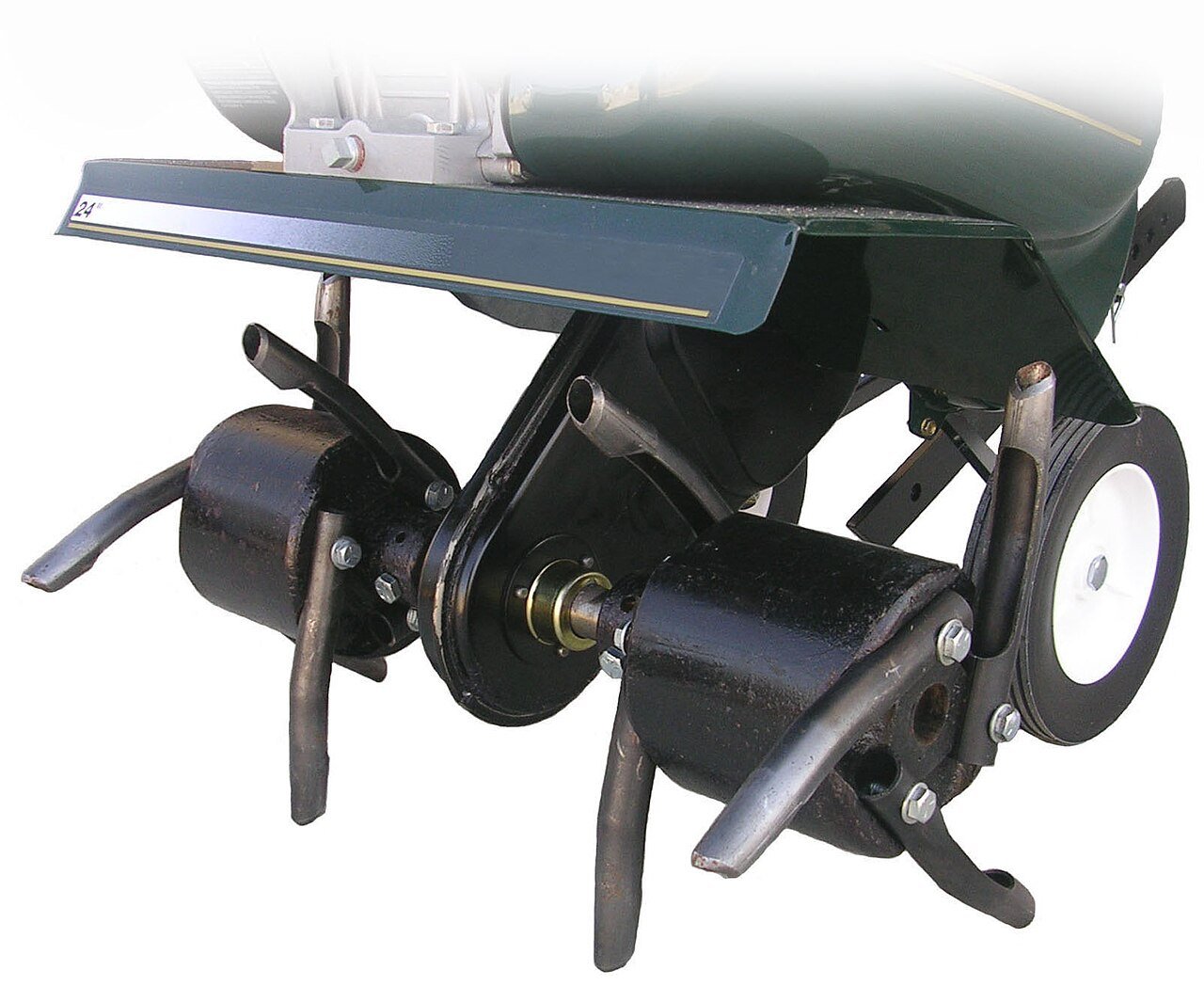
Narrow tine sets are easier to control and easier to pull through heavy soil. Wider sets cover more ground per pass but need more engine and more operator strength. A machine with removable outer tines gives you both, which is a useful feature in this category.
Tine shape matters for the finish. Curved steel tines slice and lift, leaving a rough cloddy surface that then needs raking. Bolo style tines chop more finely and leave a smoother seedbed, but they need more engine torque. On stony ground, a tiller with a small number of sturdy tines survives better than one with many thin tines that snap.
Weight, balance and leverage
Weight is a trade-off in this category. Heavier machines bite better but take more effort to move. Very light machines bounce and hop over hard ground, which is both tiring and unsafe because the tines are ahead of you and the machine is pulling toward you.
Handle height and grip diameter decide how much of the fight you absorb through your arms. A machine with adjustable handles that suit your height, plus a secondary drag bar or a set of transport wheels, is far more usable than one you have to bend into.
Depth control and the drag stake
Tilling depth is set by how far the tines are allowed to descend. On a front tine tiller that is controlled by a depth stake at the rear of the machine or by holding the handles down. A machine with a good depth stake is easier to keep at a consistent depth, which matters when you are preparing a seedbed.
Front tine tillers rarely till deeply on the first pass in hard ground. The usual technique is the opposite of what instinct suggests: make a shallow pass first to break the surface, then a second pass deeper, then a third deeper still. Three shallow passes usually beat one attempt at full depth, both in effort and in the quality of the tilth.
Working technique that saves your back
- Start shallow, go over the bed two or three times, increasing depth each pass.
- Let the machine pull forward; resist only enough to keep it moving at a walking pace.
- Work in straight overlapping strips rather than pushing into a corner.
- Till when the soil is moist but not wet. Wet soil smears into clods that dry like brick.
- Stop immediately if the tines hit a stone or a root. Clear it rather than working the machine around it.
What to check before buying
- Frame stiffness and the welding at the tine housing, because that is where light machines crack.
- Engine make and whether service parts are easy to find.
- Tine width you can reduce, and replacement tines you can buy.
- Adjustable handles and a depth stake that actually locks.
- Transport wheels, so you can move it without carrying it.
- Weight you can lift into a shed alone.
If you would rather compare the models that still make sense at this end of the market, the review of the best front tine tillers sets out engine sizes, tine widths and frame quality side by side.
Moving and storing the machine
Front tine tillers are awkward to carry because the weight sits above the tines and there is rarely a good lifting point. Transport wheels, which are small wheels that swing down so the machine can be rolled, are worth having even on a light model. Without them you will carry it, and carrying a machine with an engine and a fuel tank is exactly the moment when people strain their back.
Store it with the fuel tank drained or treated with stabiliser, especially if the tiller will sit for months. Modern petrol with ethanol absorbs water and degrades, and a gummed carburettor is the single most common reason a tiller will not start in spring. Clean the tines at the end of the season, oil the exposed metal and check the air filter. Store it upright, not on its tines.
Six mistakes that make a front tine tiller feel useless
- Trying to till at full depth on the first pass in ground that has never been worked.
- Tilling soil that is wet enough to smear, which produces clods that dry hard.
- Holding the machine back hard instead of letting it pull forward at a walking pace.
- Forcing it through a stone or a root instead of stopping to clear it.
- Running at full throttle in soil that only needs half throttle and a slower pass.
- Leaving the tines engaged while turning at the end of a row, which digs a crater.
Correct all six and the same machine that felt like a fight becomes a reasonable tool for a small bed.
Is a rear tine tiller worth the extra money?
If you are breaking new ground, tilling more than a few hundred square feet, or working heavy clay, yes. A rear tine tiller with driven wheels does in one pass what a front tine machine needs three or four passes to achieve, with far less physical effort, and it leaves a finer tilth. If your beds are small, already worked and on the light side, a front tine tiller will do the job for roughly half the cost and take up half the shed. The deciding question is not which machine is better in general, but which ground you actually have.