


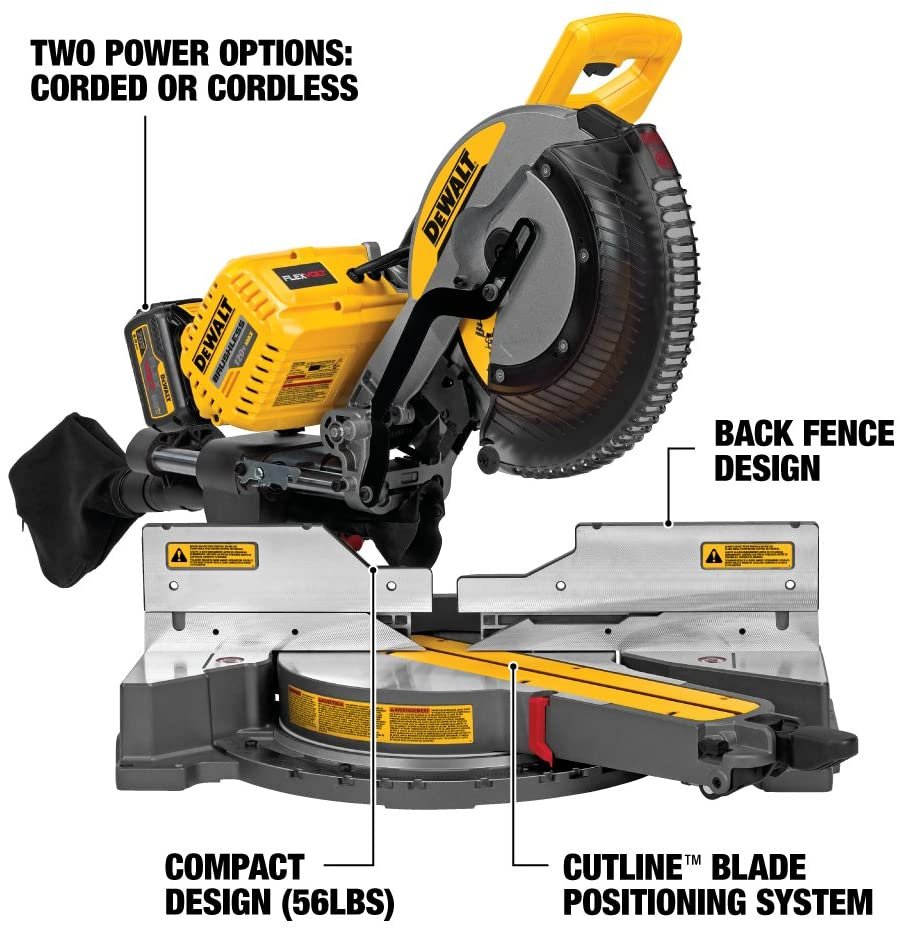
A cordless miter saw is one of the few battery tools that genuinely changes where you can work. Cut a whole room of trim in the room instead of carrying stock to the garage, and the time saving is real. The trade-offs show up in blade choice, battery platform and how you support long stock. Here is the checklist worth running through before the first cut.
Battery platform before blade
Pick the saw in the battery system you already own. A ten-inch cordless saw running on a fresh high-capacity pack will make dozens of cuts in softwood trim and noticeably fewer in hardwood or pressure-treated stock. Carry two packs if the job is more than a few dozen cuts, and keep them out of the sun.
Depth of cut matters more than blade diameter for most trim work. A seven and a quarter inch saw handles baseboard and crown in most homes; a ten inch saw adds capacity for thicker stock and costs weight.
Blade and kerf
- A 60-tooth or finer blade for trim and finish cuts
- A 24-tooth blade for framing and pressure-treated lumber
- Check that the blade is sharp before blaming the saw for a wandering cut
- Match the arbor size and the maximum RPM rating on the blade to the tool
Thin-kerf blades cut faster on battery power but deflect more on thick stock. On a cordless saw, a sharp thin-kerf blade in good condition is usually the right compromise.
Set up the cut, not the saw
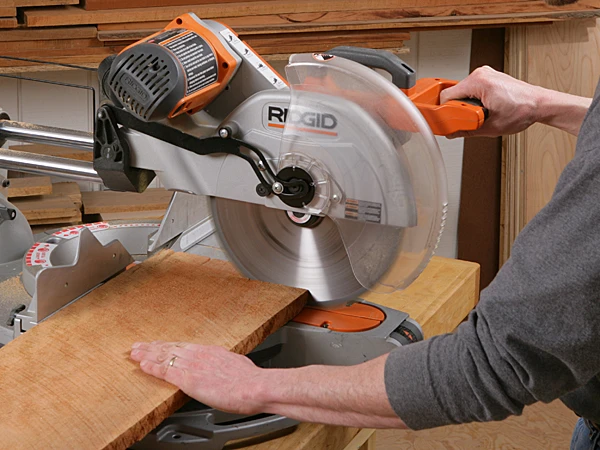
Clamp the workpiece. A miter saw that moves the stock cuts a joint that will not close, and a cordless saw with a fresh battery has enough torque to move an unclamped board. Support long stock at both ends so it does not bind the blade on the way down, and make sure the saw’s base sits flat on the bench rather than bridging a gap.
Check the detents at the angles you actually use. Factory stops are often slightly off at 45 degrees, and a half degree at the miter shows up as a visible gap on a picture frame or a crown joint. Verify with a test cut and a square before you cut the good stock.
Dust and safety
Cordless saws rarely have great dust collection, so plan on a bag, a vacuum adapter or a drop cloth. Wear eye protection; a miter saw throws debris backward and up. Keep the blade guard free, let the saw reach full speed before the blade touches wood, and let it stop on its own after the cut.
If this is your first saw of this type, the sequence of measuring, marking, clamping and test-fitting matters as much as the machine. A step-by-step cordless miter saw setup guide is worth reading once before you start cutting trim you cannot replace.
When cordless is the wrong call
If the saw will live in one shop and run for hours a day, a corded model gives you more consistent power for less money. Cordless earns its keep on remodels, punch lists and anywhere a cord is a trip hazard. Be honest about which of those is your actual work.
Bottom line
Choose the platform you already own, fit a sharp fine-tooth blade, clamp everything, and test the detents before cutting the good stock. Do those four things and a cordless miter saw will cut as cleanly as any corded unit in the same class.