


A 4000-watt generator is the size most homeowners land on when they want to keep a fridge, a furnace blower and a few lights alive during an outage. The runtime question is the one that decides whether that plan works at two in the morning, and the honest answer is that the number on the box is measured under a load you will never actually see.
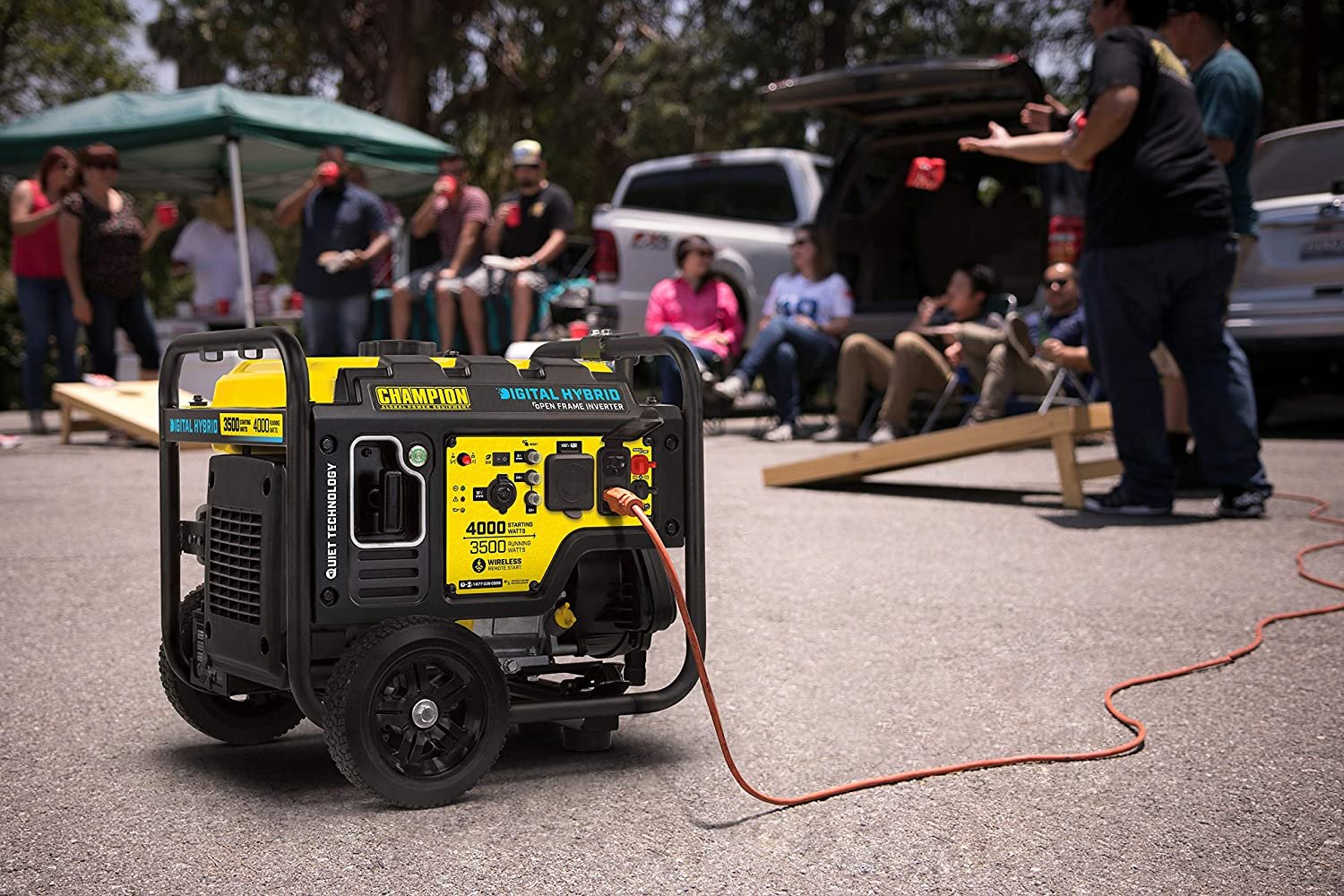
What the rating actually means
Manufacturers publish runtime at 25, 50 and sometimes 100 percent load, on a full tank, at sea level, with a new engine and a steady resistive load. Real households are none of those things. Loads switch on and off, engine efficiency drops as the unit heats up, and a tank you filled last season may not be full this season.
A 4000-watt unit typically carries a tank in the three to four gallon range and returns somewhere between nine and fourteen hours at half load. At a realistic backup load of 1200 to 1800 watts, most owners see a full night and part of a morning on one tank. At full load, expect roughly half that.
The load math that matters
Add up what you actually intend to run, not what the panel says it can run. A modern refrigerator draws 100 to 200 watts running but can spike several times that on compressor start. A gas furnace blower is often 400 to 800 watts. A sump pump is a few hundred watts running with a much larger surge. Lights and electronics add a couple of hundred watts at most.
That arithmetic usually lands a household between 1200 and 2500 watts of running load, which is comfortably inside a 4000-watt unit’s continuous rating and leaves headroom for motor starts. The trap is adding a space heater or a microwave. Either one can push you past the continuous rating, and both are easy to forget because they are small appliances.
Runtime versus surge
Surge capacity is measured in seconds, not hours. A 4000-watt generator might handle 5000 watts for a brief motor start, and that is fine for a fridge or a furnace. It is not fine for a welder, a well pump with a deep draw, or an air conditioner with a hard-start compressor. If your plan includes any of those, size up.
Practical ways to stretch a tank
- Run the heavy loads in daylight and let the unit idle on light loads overnight
- Keep the unit out of direct sun; heat soak costs fuel efficiency
- Use a maintenance charger so you are not running the generator to charge phones
- Keep the air filter clean, since a choked engine runs rich and burns more fuel
- Store fuel properly and rotate it, because stale fuel costs more runtime than any accessory
If you want the tank-by-tank arithmetic for this class of machine, including how load percentage changes the hours you get, the detail in this guide to 4000-watt generator fuel consumption is worth reading before you commit to a backup plan.
Where a 4000-watt unit stops being enough
It stops when you want central air, an electric water heater, an electric range, or a well pump with a large motor. Those loads belong in the 7000-watt-and-up class, and pretending otherwise leads to nuisance tripping and a generator that runs hot. Be honest about the list before you buy.
Safety items that are not optional
Never run a portable generator indoors, in a garage, or under a window, and never backfeed a house panel without a transfer switch. Carbon monoxide kills people every storm season, and a generator that is quiet enough to forget is the most dangerous kind. Put a battery-powered CO alarm near the sleeping area if the unit runs at night.
Bottom line
A 4000-watt generator buys you a night or so of essential power on a full tank, and the exact hours depend on how disciplined you are about load. Size for surge, plan for fuel, and treat the published runtime as a best case rather than a promise.