


A bench sander and a random orbital sander both remove material and both leave a surface you can finish, which is exactly why so many first-time buyers end up with the wrong one on the bench. They are not interchangeable. They solve different problems, and the difference shows up the moment you move from rough lumber to a finish coat.
The short answer
If you are flattening edges, working small parts, or shaping curves, the bench sander wins. If you are sanding flat panels, doors, tabletops or a finished wall of cabinetry, the random orbital wins. Most serious shops end up owning both, but if you can only buy one, buy the orbital first and add a bench sander when a project demands edges rather than faces.
How each machine actually cuts
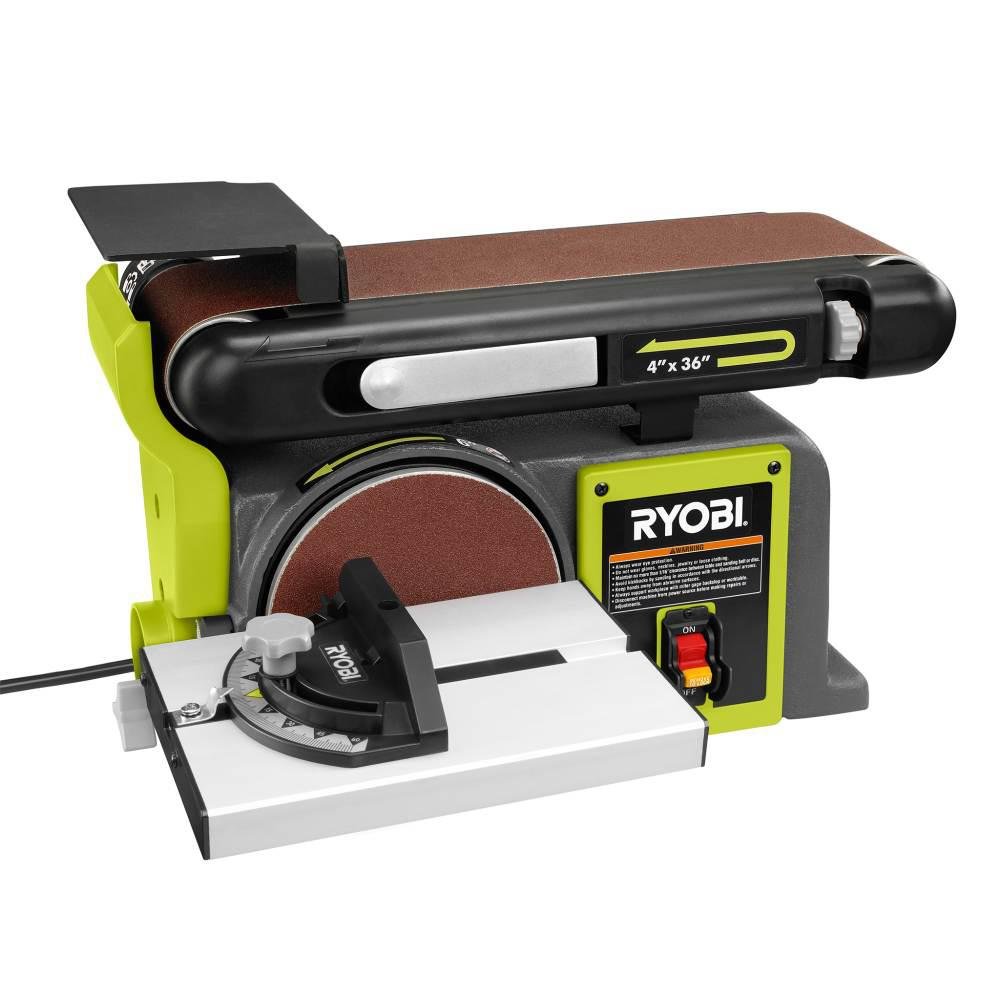
A bench sander runs an abrasive belt or disc on a fixed platen. You bring the work to the abrasive, not the other way around. That gives you a straight, repeatable reference edge and a very aggressive cut rate. A 4×36 belt with 80 grit will eat end grain faster than anything else in a small shop, and a disc sander will true up a curve in seconds.
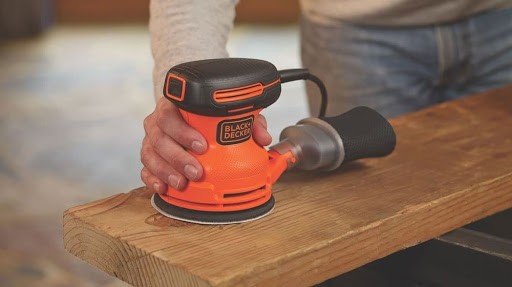
A random orbital sander moves the pad in a small eccentric orbit while the pad spins. The scratches cross each other at constantly changing angles, so the abrasive leaves a much finer, more uniform scratch pattern than a belt ever will. You move the tool over the work, which means the machine follows the surface instead of forcing it flat.
Where the bench sander is clearly better
- Trueing a square edge on a small part before assembly
- Shaping curves and chamfers where a flat platen gives you control
- Removing burn marks and squeeze-out on narrow stock
- Sharpening and honing chores with the right belt
- Working parts too small to clamp safely for an orbital
The trade-off is that the bench sander cannot flatten a wide panel. Feed a slightly twisted board across a belt and the sander copies the twist. It is a shaping tool, not a flattening tool.
Where the random orbital is clearly better
- Prepping a tabletop or door for stain and clear coat
- Leveling primer and knocking back between finish coats
- Blending a repair into a larger flat surface
- Sanding drywall patches without gouging the paper face
- Working large areas without wearing out your wrists
For a finish-ready surface on a flat panel, the orbital is the only sensible choice. A belt sander leaves straight scratches that telegraph through a thin finish, and no amount of hand sanding fully hides them.
Grit progression matters more than the machine
Whatever you buy, the abrasive is where the quality comes from. A typical progression for bare hardwood is 80, 120, 150 and then 180 or 220 depending on the finish system. Skipping a grit does not save time; it leaves deeper scratches that the next grit has to remove, and you burn more paper and more patience in the process.
Random orbital discs load up quickly on resinous woods, so buy more than you think you need. Belts last longer but a glazed belt cuts hot and burns edges, which is a common cause of the dark scorch lines people blame on the machine.
Dust control is not a luxury
Both machines generate fine dust, and fine dust is the fraction that stays airborne. A random orbital with a good shop vac and a perforated pad will collect most of what it makes. A bench sander without extraction throws a plume straight at your face. Budget for extraction at the same time you budget for the tool, not six months later.
Which one to buy first
Count your last five projects. If four of them involved flat panels, buy the orbital. If four of them involved small parts, edges and curves, buy the bench sander. If you build furniture, the orbital is the one you will reach for weekly and the bench sander is the one you will reach for on assembly day.
One practical note on hardwood: the grit sequence and pad hardness matter more than orbit diameter, and the same logic applies whether you are sanding a floor or a tabletop. If you are working with oak, maple or hickory and want to know which abrasive sequence actually leaves a finish-ready surface, this breakdown of choosing a sander for hardwood floors is a useful reference before you buy paper.
A note on technique
Let the tool do the work. Pressing down on an orbital loads the pad, slows the orbit and leaves swirl marks. Pressing a part into a belt burns the edge and rounds it over. Keep the workpiece moving, keep the abrasive clean, and stop when the scratch pattern is uniform rather than when you are tired of sanding.
Bottom line
The bench sander shapes. The random orbital finishes. Buy for the job you do most, add the other when a project forces your hand, and spend the difference on abrasive and extraction rather than on a bigger motor you will not use.